

A. Definition and purpose
Sewerage treatment plants are specialized facilities designed to remove contaminants from wastewater, primarily from household sewage and industrial effluents. Their primary purpose is to purify water before it’s released back into the environment, ensuring the protection of public health and ecosystems.
B. Importance in urban infrastructure
Sewerage treatment plants play a crucial role in urban infrastructure for several reasons:
- Public health protection
- Environmental preservation
- Water resource management
- Urban development support
These facilities are essential for maintaining the quality of life in densely populated areas and supporting sustainable urban growth.
C. Types of sewerage treatment plants
There are several types of sewerage treatment plants, each suited to different needs and environments:
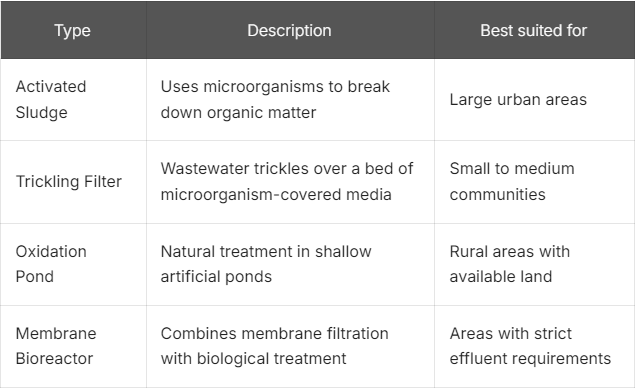
D. Key components of a treatment plant
A typical sewerage treatment plant consists of several key components:
- Preliminary treatment units
- Bar screens
- Grit chambers
- Primary treatment
- Primary clarifiers
- Secondary treatment
- Aeration tanks
- Secondary clarifiers
- Tertiary treatment (advanced)
- Filtration systems
- Disinfection units
- Sludge handling facilities
- Thickeners
- Digesters
- Dewatering equipment
Each component plays a specific role in the overall treatment process, ensuring that the final effluent meets the required quality standards before being discharged into the environment.
Now that we’ve covered the basics of sewerage treatment plants, let’s delve into the intricate steps involved in the treatment process itself.
BIO-TROPIC INDUSTRIES SDN BHD


